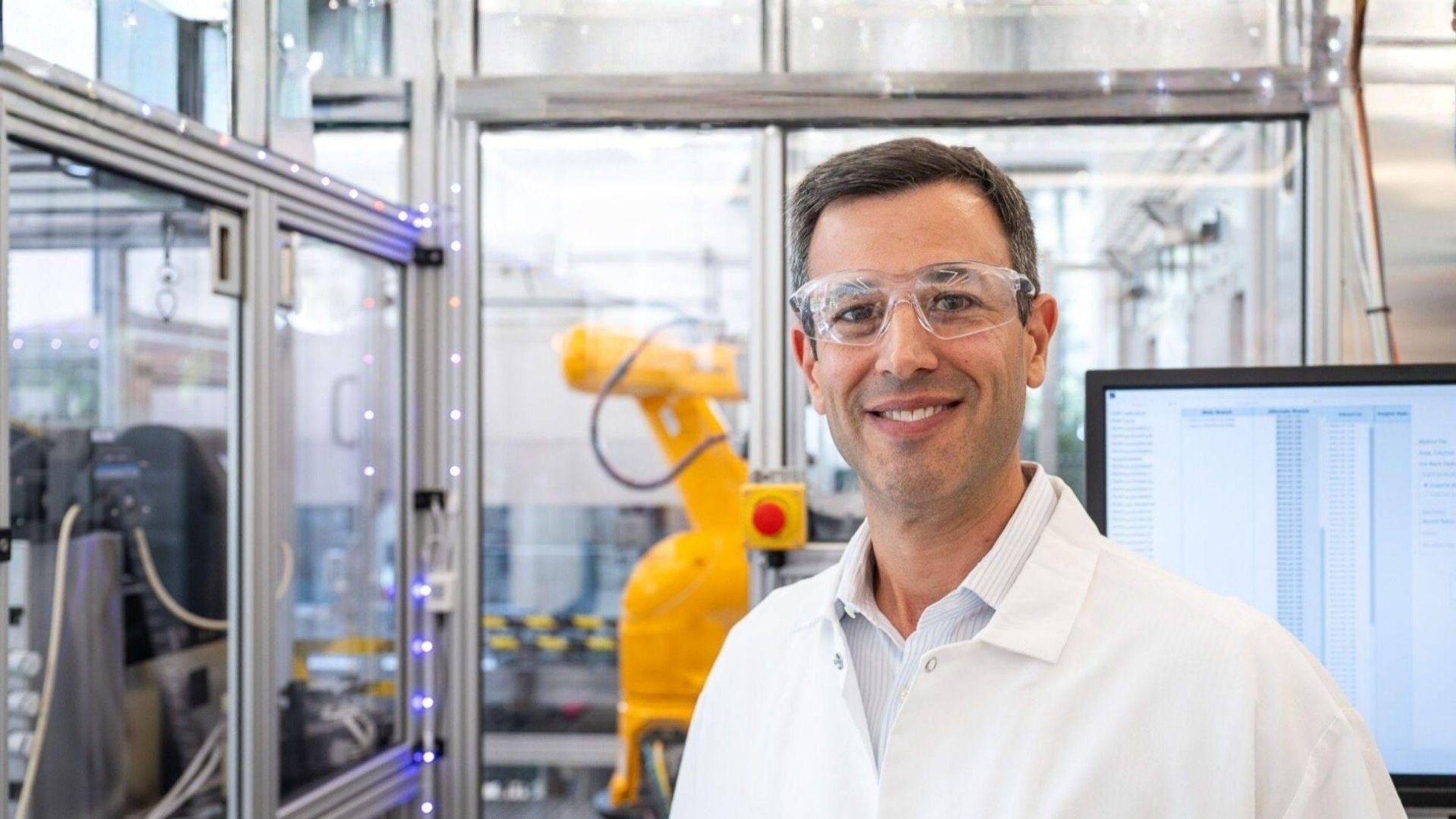
Every major company in the industry is integrating AI into drug development. At Sanofi, AI tools are embedded across more than 90% of the company’s small-molecule research portfolio.
But as AI reshapes how medicines are discovered and developed, success won’t be defined by speed of adoption. It will be defined by whether patients trust what comes from it.
Matt Truppo, Sanofi's Global Head of Computational & AI Strategy in R&D, explains what that means in practice and the steps we are taking at Sanofi to earn that trust.
You’ve Said Responsible AI Ultimately Comes Down to Trust. What Do You Mean by That, and Why Does It Matter Specifically in Drug Development?
AI is unlike anything the industry has used before – not just in what it can do, but in how quickly it’s been adopted. That scale creates real opportunity. It also means decision-making, ethics, and accountability have to stay with people.
That’s why when we made the decision to go “all in on AI” at Sanofi, we knew we needed a governance backbone in place to do it. We established our RAISE (Responsible AI at Sanofi for Everyone) framework to protect the trust chain that already exists in pharma: from the manufacturer all the way to the patient. A patient doesn’t necessarily know or care whether AI helped design their medicine. What they care about is that it’s safe, it’s effective, and the scientific foundation holds up.
The decision framework and the ethics behind what we do and when we do it has to remain with human beings.
Matt Truppo
Global Head of Computational & AI Strategy in R&D
We’ve Observed More Than Three Years of Rapid Advancement Since Sanofi’s ‘all in on Ai’ Commitment and the Establishment of the Raise Framework. What’s Changed in How You Think About and Apply It?
The framework is still strong. What's evolved is how we calibrate risk. Transparency we can always deliver — we can show a regulator the model, the data, and the approach. Explainability is harder, and we've learned the rigor has to match the stakes. So, the question we ask now isn't just 'can we automate this?' It's 'what happens if it's wrong, and can we recover?
For example, we’re building a system right now with the goal of running a full molecule-generation cycle autonomously — design, make, test, analyze, and then design again — without human intervention at each step. The downside if something goes wrong is time, resources, and some chemicals in the lab.
Where in the Drug Development Process Is AI Having an Impact at Sanofi Right Now?
Starting at the very beginning, we have target identification. AI helps us synthesize multidimensional datasets — genomics, transcriptomics, spatial biology — and rank-order targets with a speed and precision we can't reach with humans alone. We’ve developed what we call target identification engines, and they’ve helped us add more than a dozen new targets to our pipeline in under a year.
Further downstream is LabAI, one element of which we’re building with our partner BenchSci. Deployed so far is a knowledge tool that traces every answer back to the exact peer-reviewed source, so researchers can trust what they're reading about the biology and spend their time on analysis and experimentation instead.
And finally, where I believe we’ve seen the most significant impact thus far are digital patient twins. These are virtual models simulating how treatments affect different patient groups, which have, in some cases, supported regulatory approvals, and in others, accelerated intermediate clinical trials. For example, we were able to expand into pediatric indications for one of our approved medicines (where recruiting children would have been particularly difficult) because we could demonstrate predicted safety and efficacy from the twin dataset.
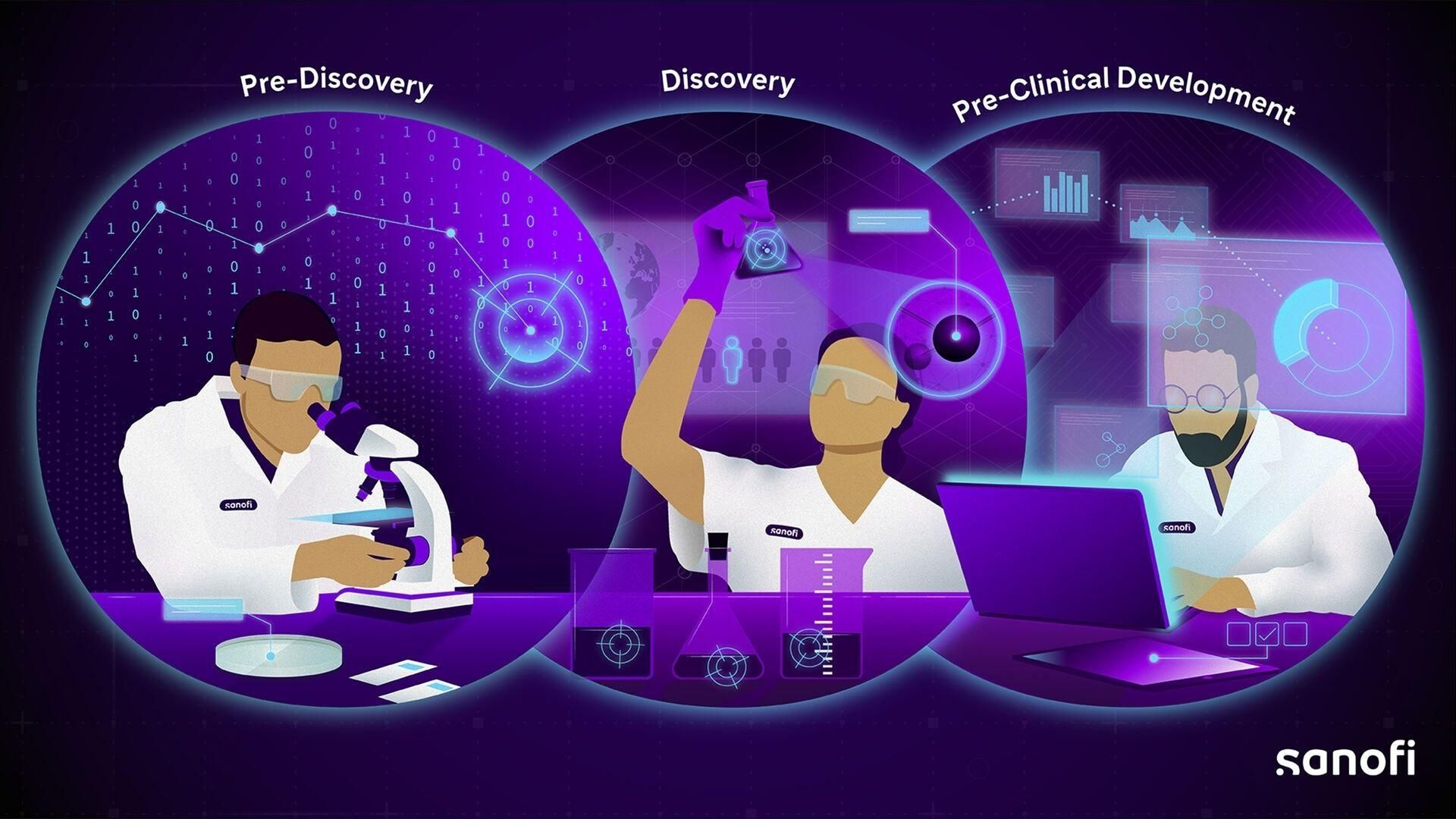
The three stages of early drug development, pre-discovery, discovery and pre-clinical development, demonstrating the work involved at each stage to design a new drug candidate.
Reaching Underrepresented or Difficult-To-Recruit Groups Points to the Much Larger Challenge of Clinical Trial Diversity. Is AI Part of the Solution — or Is It at Risk of Making the Problem Worse?
Both are genuinely possible. Which is exactly why you have to intentionally build for clinical trial diversity from the start. It won’t emerge from the tool on its own.
At Sanofi, representation requirements for trial populations are built directly into our AI trial-design tools. For recruitment, we adapt outreach across languages and cultural contexts, with every piece validated by a person first. A trial that doesn't reflect the population it intends to treat fails the patients who need that medicine most.
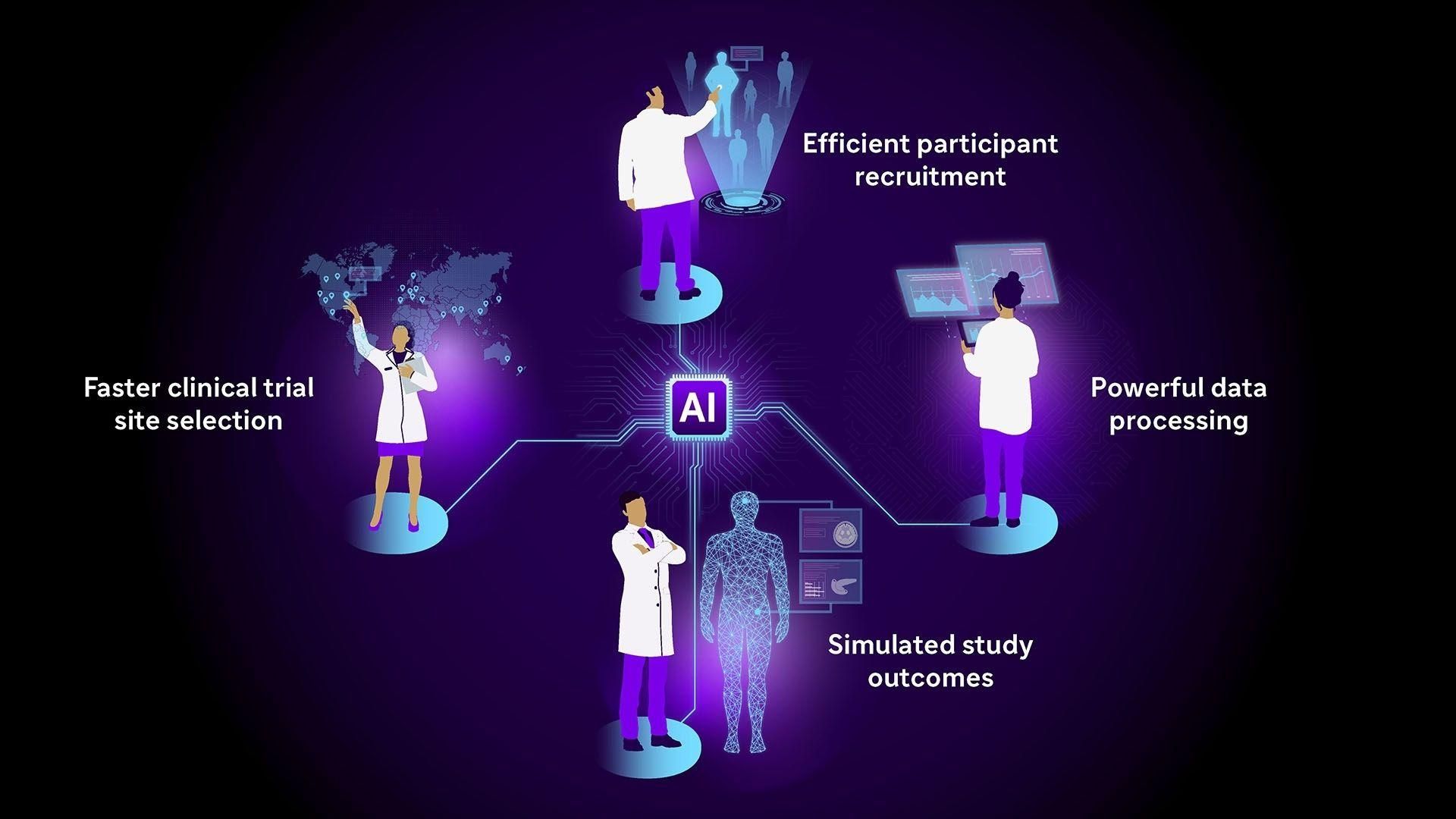
AI streamlines clinical development by enabling faster trial site selection, efficient patient recruitment, simulated study outcomes, and powerful data processing.
Where Does Human Judgment Remain Non-Negotiable?
The dividing line is risk to the patient. For patient selection, toxicology, and safety assessments, a person is in the loop. Always.
We also have to be honest about partially explainable outputs. When a model surfaces an insight from real-world evidence and can't fully account for how it got there, we don't just act on it. We document the rationale, we're explicit about how much weight we gave the AI output versus other evidence, and we make an informed judgment. The model informs the decision. It doesn't make it.
We are simultaneously optimistic and critical when it comes to AI – and that’s exactly where we should be.
Matt Truppo
Global Head of Computational & AI Strategy in R&D
Speed of Adoption Clearly Isn’t the Differentiator Anymore. So, What Is — for Sanofi and for the Industry?
What I keep coming back to: we can build all the tools we want, but if we don’t change how we work with them, and if patients and regulators can’t trust what comes out the other side, none of it matters. These tools only deliver if the science behind them is trustworthy and if the people using them know where to push back.
The companies that define the next era won’t necessarily be the ones that moved first. They’ll be the ones that built well and can demonstrate why their outputs can be trusted.